Redefining Expertise: Why Even Masters Need to Relearn MovementA Professional Review of the Dynamic Myofascial Release Course at RSM International Academy
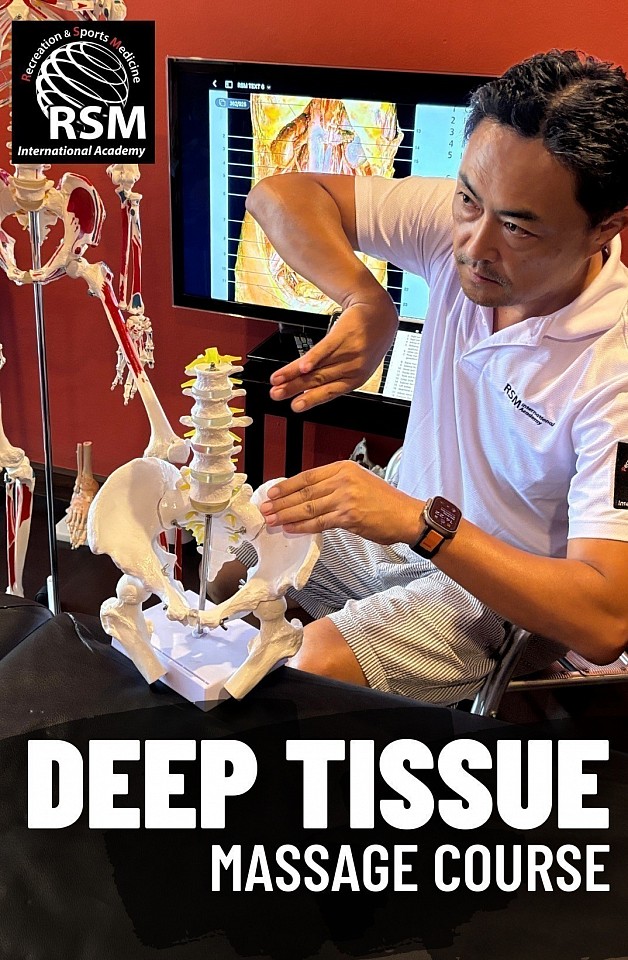
As a licensed therapist with decades of clinical experience, I admit I can be cynical about continuing education. I’ve sat through countless workshops that promised "advanced techniques" but delivered nothing more than a remix of basic strokes. I entered the Dynamic Myofascial Release Course at RSM International Academy expecting a solid review, perhaps a few new tricks.
I was humbled. This training didn't just polish my existing skills; it dismantled them and rebuilt my understanding of soft tissue from the ground up. It was less like a massage workshop and more like a masterclass in functional sports medicine.
Evidence Over Intuition
Veterans often rely on "hands-on intuition." Hironori Ikeda (MSc Sports Medicine) challenges that by demanding clinical evidence. The course is built on a foundation of exploring fascia anatomy and function using high-resolution cadaver imagery and slow-motion biomechanical analysis.
For years, I visualized muscles as isolated units. Seeing the deep fascial layers gliding (or sticking) in real human specimens changed my mental map completely. It gave me the visual proof I needed to understand how to identify fascial restrictions—distinguishing between a hypertonic muscle belly and a fibrotic fascial adhesion. This distinction is the difference between temporary relief and permanent correction.
Treating the "Unsolvable" Cases
We all have those clients who never seem to get better—the runners with chronic IT band issues or the office workers with recurring foot pain. This course provided the missing link. We dove deep into myofascial release for runners, analyzing how restrictions in the hip rotators or the fascial lines of the lower leg manifest as knee pain.
We also tackled specific pathologies like myofascial release for plantar fasciitis. Instead of just grinding into the painful foot, we traced the kinetic chain up the posterior line, releasing adhesions in the calf and hamstrings that were loading the plantar fascia. The logic was undeniable, and the results were immediate.
The Nerve Glide Factor
One of the most transformative aspects for an experienced practitioner was the integration of nerve glides. I had always treated nerves as a "cautionary zone." Ikeda Sensei taught us that nerves must be able to glide between fascial layers for movement to be pain-free.
Learning to mobilize these pathways safely has revolutionized how I treat entrapment syndromes. It explains why some deep tissue work fails—if the nerve is stuck, pressure just irritates it. This nuance alone was worth the tuition.
Efficiency in Motion
A major revelation was the comparison of myofascial release vs traditional stretching. I’ve spent years manually stretching clients, often fighting against their tissue resistance. I learned here that if the deep fascia is adhered, static stretching is futile and potentially harmful.
By applying the specific "Dynamic Myofascial Release" techniques first, we saw instant changes. Improving mobility with myofascial release became a matter of seconds, not sessions. Watching a hip open up by 20 degrees after a single targeted release proved that I had been working harder, not smarter, for years.
Structural Integrity
The course also refined my approach to myofascial release for improving posture. We didn't just look at "slouching"; we analyzed how deep visceral fascia and anterior pelvic tilts pull the skeletal structure out of alignment. Releasing the deep psoas and multifidus layers allowed clients to stand taller effortlessly, proving that posture is a tension issue, not just a habit issue.
The Verdict
The instruction is rigorous. Hironori Ikeda brings 25 years of clinical acumen that commands respect. He doesn't teach "routines"; he teaches clinical reasoning.
For licensed therapists who think they have seen it all, this advanced clinical training is a wake-up call. It reorganized my professional identity from a manual therapist to a movement specialist. If you want to stay relevant in modern rehabilitation and deliver results that actually stick, this course is essential.